

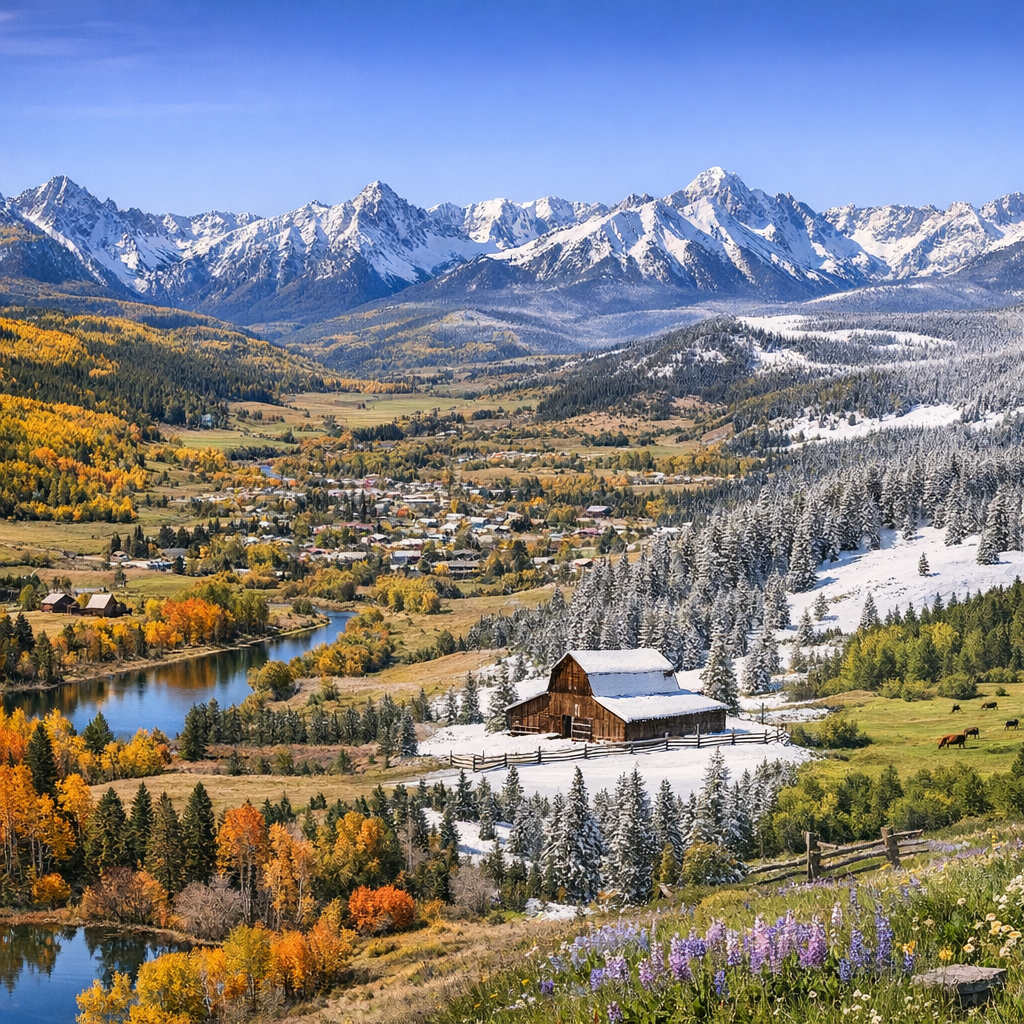
Ridgway, nestled in the heart of Colorado’s San Juan Mountains, experiences a diverse climate characterized by distinct seasonal variations. Understanding these patterns is essential for residents and visitors alike.
Temperature Trends
Throughout the year, Ridgway’s temperatures fluctuate significantly. Average high temperatures range from 38.2°F (3.4°C) in January to 84.3°F (29.1°C) in July. Correspondingly, average low temperatures span from 10.0°F (-12.2°C) in January to 49.4°F (9.7°C) in July. This variation underscores the importance of preparing for both cold winters and warm summers.
Precipitation Patterns
Ridgway receives an average annual precipitation of approximately 15.87 inches (403.09 mm). Monthly precipitation varies, with April typically being the wettest month, averaging 1.46 inches (37.08 mm), and June the driest, averaging 0.82 inches (20.83 mm). These patterns influence local agriculture and water resource management.
Seasonal Changes
Spring in Ridgway brings a gradual warming trend, with average high temperatures increasing from 43.5°F (6.4°C) in April to 54.1°F (12.3°C) in May. This period also sees a mix of rain and snow, with May averaging 1.69 inches (43 mm) of precipitation over approximately 10.8 days.
Summers are warm and relatively dry, with July being the warmest month. However, occasional afternoon thunderstorms can occur, contributing to the region’s precipitation.
Autumn sees a gradual cooling, with decreasing daylight and temperatures. This season is often marked by clear skies and vibrant foliage, making it a favorite for outdoor activities.
Winters are cold, with significant snowfall, especially in higher elevations. Snowpack during this season is crucial for replenishing water reservoirs and supporting winter sports tourism.
Environmental Considerations
Ridgway’s climate is influenced by its mountainous terrain. The region’s elevation contributes to temperature inversions, where cold air settles in valleys, leading to colder temperatures at lower elevations during winter nights.
Additionally, the area’s semiarid climate means that water resources are limited. Effective water management is essential to support agriculture, recreation, and daily living needs.
Understanding Ridgway’s climate patterns helps residents and visitors make informed decisions, from daily activities to long-term planning. Staying informed about seasonal changes and environmental factors ensures a harmonious relationship with our natural surroundings.